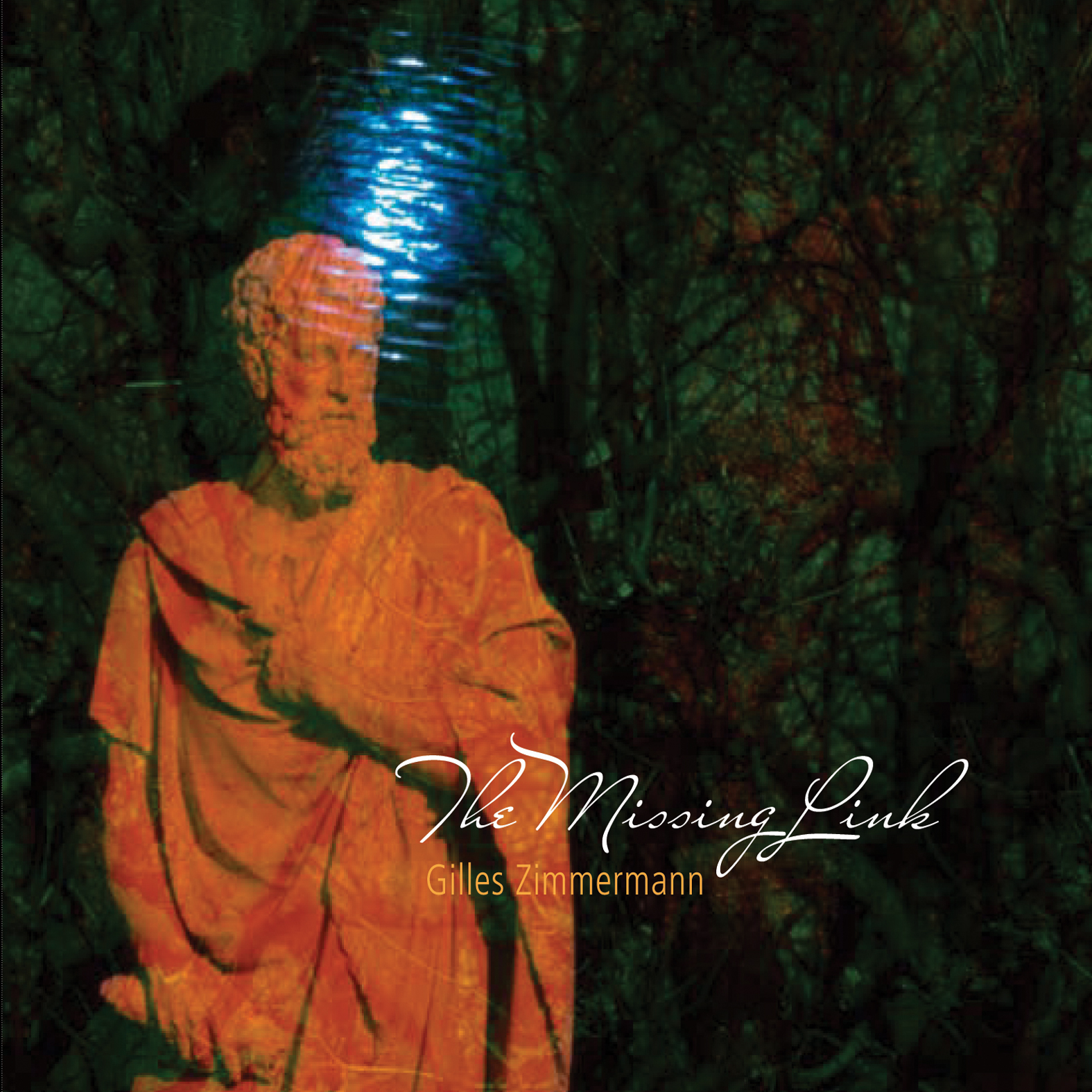
 Gilles Zimmermann : The Missing Link.
Viola da gamba creating new world music.
I have to explain a little bit about my work as a composer and musician. The
"missing link" I'm talking about here is the viola da gamba, originally an
improvisation instrument, which happens to be able to associate with all
traditional instruments of the world.
There is the manifestation, then the writing of a composition (to communicate
with other musicians), and most important of all, its interpretation. In both
cases, for me, it is always a question of improvisation.
Open-minded music for Open-minded people.
Why "World Music"?
In the jungle of commercial-style classifications, as on MySpace or other
internet portals there isn't any label (open-minded music) yet, I have to use
the catch-all wording of "World Music". As my music "blends" influences from all
over the world, so be it; whatever, I'll always be French. When I started
playing music, and later the viola da gamba, I never wondered about musical
style, which brought me some problems with various "police", the "jazz police",
the "baroque police", the "art producer police" ("this music is too good for
that film") ... are there also "World music police"?
Meeting with older "masters" did help me a lot on my way. Martial Solal in 1979:
"You can do what you want but should be able to explain it". Constantly
unsatisfied, I never felt at ease in a style, and always went too far for my
colleagues. Someday someone offered me a book by A.K. Coomaraswamy: "The
Transformation of Nature in Art", in which he explains traditional art, and the
idea that Style is the man, and by no means the essence of art.
Another "master", Dr. M. Bernhard, professor at the Music Institute of the
Bavarian Academy of Sciences (sounds good ay!),opened the doors of his library
to me. So I studied European medieval music treaties and naturally Gregorian
music. I discovered real treasures. References always go back to Plato. But as
information here was relatively vague, I continued by searching in Arabic and
Indian music.
Traditional bases of music theory are almost the same everywhere on this planet.
Learning through books, is fine, but I consider it not enough, and the theory
must be experienced through actual traditional practice, when possible. So I
experienced with mostly oriental musicians (Arab, Turkish, Indian), as the
practice of modal improvisation is more than rare in the West.
So I have been able to revitalize all these modes, which have been known as
"church modes" ever since good old Gregory.
The discovery of the viola da gamba in 1993 for a film score did change my music
a lot. For about 15 years I stopped working with chords and did only melodies,
but as I still liked ensemble music I composed pieces using parallel melodies,
like in "The City". Meeting modern hurdy-gurdy player Valentin Clastrier has
been crucial, as he advised me to use electronics with the viola da gamba. Here
I found a link to my past with electric guitar, where I used all well-known
effects like echo, reverb, wah-wah, flanger etc., plus the synthesizer and
sampler worlds. In my career during some studio recordings, I happened to have
to replay a bass line, then a keyboard and even percussion part, realizing at
the end, apart from the vocals and possibly drums, I had played everything.
Little Mike Oldfield from Nancy was born.
I always use a special concept for a composition, as in film music. I have about
3 hours of compositions waiting for recording (Dragon, Tortue, Libellule,
Papillon, Funambule...), the titles say it all.
In this recording I chose the most accessible compositions, leaving too complex
rhythms (9, 6, 5, 11 and 13, in the relevant order), and used almost everything
I had at my disposal (Ableton Live software), a lot of vocoder. As I don't have
a midi viol, I "had to" put the sound of the viol through the filter of a
synthesizer or sampler. And then even a wah-wah effect. "Why not?" said Frank.
Not being subjected to time constraints as support for images, the compositions
did not have to be formatted in an acceptable way for the masses; each musical
idea implies its own development, and so the pieces are relatively long, sort of
"symphonic poems".
The interpretation is another "paire de manches" (a whole different ball game).
Find the musicians who can, who will, who dare, and who stay, most importantly
of all modal improvisers. And keep it going. This recording reflects my ideal
ensemble, and I hope to reproduce it live as soon as possible.
Songs:
1. The City Labyrinth
2. The City Cardo
3. The City Decumanus
4. The City Temple
5. The City Garden
6. La Bossa De La Inca
7. Con Ota Man in a Cage
8. Con Ota
9. Viole a Voile
Listen to: the entire album.
License Viola da gamba creating new world music by Gilles Zimmermann for your project.
Play the music of Gilles Zimmermann in your restaurant or store.
Release date: 02/27/2015
Gilles Zimmermann lives in Egling an der Paar Germany
Tagged as: World, Classical, Renaissance, Viola da Gamba
Recommended albums:- Hidden Sky by Jami Sieber: enchanting cello compositions
- Il Rossetto, Domenico Bianchini's Lute Book (1546) by Richard MacKenzie: Virtuoso English Lutenist and Guitarist
- Mozart 4 Quartets for Strings and Winds by American Baroque: Spectacular Baroque and Classical chamber music
- Music of Waters by Shira Kammen: early folk and celtic music.
- The Castle of the Holly King by Shira Kammen: early folk and celtic music.
- Debut by AlmaNova: lively flute/guitar duo
- The Four Seasons by Vivaldi by American Baroque: Spectacular Baroque and Classical chamber music
- Life in Reverse by Almer and Nirvan: soulful Balkan duo featuring acoustic guitars and voice
- Canconier by Canconier: Medieval music from the 12th to the 15th centuries
- SL Weiss on 11 Strings by Paul Berget: renaissance lute, modernized.
- Rondeau Melancolique by Alex McCartney: Reflective, historically-informed performance on the lute
- Dances and Suites of Rameau and Couperin by American Baroque: Spectacular Baroque and Classical chamber music
- Schumann Romances by Gonzalo X Ruiz: baroque oboist extraordinaire
- Angelorum - The Harps in the Trees by Cheryl Ann Fulton: World-class performer and teacher of Medieval, Baroque, Welsh triple, Celtic and Concert harps.
- Wild Wood by Kammen and Swan: a bright edge to traditional Celtic tunes
- Music from Braid by Sieber, Kammen and Fulton: dreamy music from the acclaimed video game Braid
- Guinevere by Jeff Wahl: acoustic new age and jazz guitar.
- The Dawn of Joy by Shira Kammen: early folk and celtic music.
- Classic Giuliani by AlmaNova: lively flute/guitar duo
- Pastourelle by Fortune's Wheel: a spirited rediscovery of the riches of medieval musical traditions
Downloads:
- MP3: High quality MP3 variable-bit-rate files. Most people download these: they are audiophile files that play everywhere.
- ALAC: Perfect quality Apple Lossless format files. If you use iTunes or an iPod, get these. They're an exact audio copy of the original CD, and include the CD artwork and artist info. This is the same format as High Definition audio provided by the iTunes store.
- AAC: High quality Apple Audio Codec files. If you use iTunes or an iPod, these files sound great and include CD art and artist info. This is the standard format provided by the iTunes music store.
- WAV: Perfect quality WAV files. This format works everywhere, and is an exact audio copy of the original CD. It sounds fantastic. Album art and artist info is unfortunately not possible with this format.
- FLAC Perfect quality open source FLAC files. This is an open source audio format. It is an exact copy of the original CD, and includes CD artwork and artist info. Works great on Linux, VLC and many audio players based on open source.
- OGG: High quality open source OGG files. This is an open source audio format. It is a compressed (smaller file size) version of the original CD, and includes CD artwork and artist info. Works great on Linux, VLC and many audio players based on open source.
- 128k: Medium quality 128K MP3 files. These are medium audio quality MP3 files that will work on every device. The audio quality is good enough for most uses. These files are intended for cases where you want to conserve disk space.

![[Magnatune : we are not evil]](http://he3.magnatune.com/images/m3/inside_magnatune_logo.gif)
![[Free trial: only $15 per month]](http://he3.magnatune.com/images/m3/inside_mascot.gif)
![[login]](http://he3.magnatune.com/images/m3/login_btn.gif)
![[info]](http://he3.magnatune.com/images/m3/info_btn.gif)